Train for a career in food manufacturing with hands-on experience, college credits, and a nationally recognized certification — all while getting paid.

Food Processing Machine Operator Apprenticeship
18-MONTHS | 3,000 HOURS
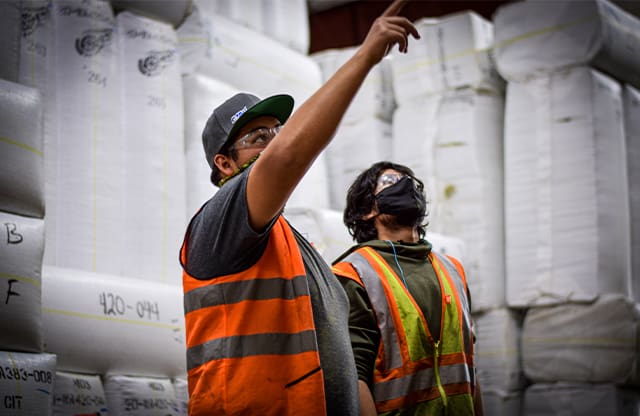
Launch Your Career in Food Manufacturing
Food processing is one of Washington’s fastest-growing industries — and it needs skilled operators to keep production safe, efficient, and reliable.
As an AJAC apprentice, you’ll spend 18 months learning to operate, maintain, and troubleshoot industrial food equipment used in production and packaging.
| Program Length | 18-Months |
| On-the-Job Hours | 3,000 |
| College Classes | 6 |
| College Credits | 30 |

Hands-On Training That Builds Real Skills
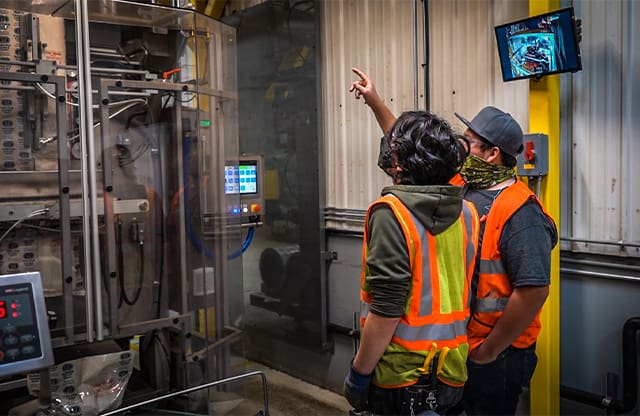
Food Processing Machine Operators keep manufacturing lines running — safely and smoothly.
You’ll learn how to:
- Set up and adjust production machinery
- Monitor, test, and document production processes
- Perform preventative maintenance and quality checks
- Follow strict food safety and sanitation procedures
Every industrial machine needs a skilled operator — someone who knows how to keep production on track and products safe.
Why Apprenticeship Makes Sense
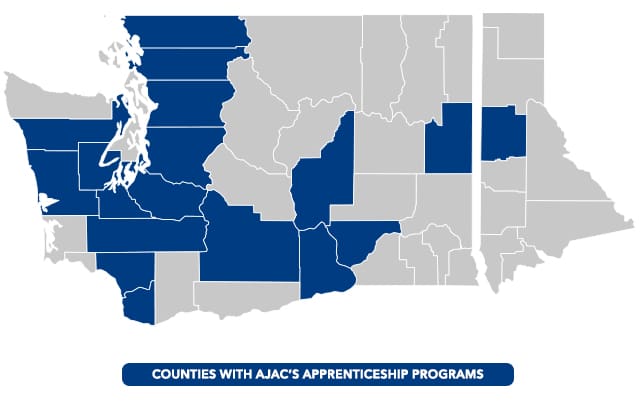
Hands-On Training with Real Employers
AJAC partners with 300+ advanced manufacturers across Washington and Idaho. Apprentices work under the guidance of mentors who teach them how to operate safely and efficiently in real production environments.
Industries That Hire AJAC Apprentices:
- Food and Beverage Production
- Industrial Packaging
- Equipment Manufacturing and Maintenance
Earn a Paycheck While You Learn
$
20.02
*
/hour
This apprenticeship gives you the training, experience, and credentials to start strong in manufacturing — without taking on student debt.
Program Benefits:
- Earn while you learn (paid on-the-job training)
- 50% reduced tuition — many employers cover 100%
- 30 college credits upon completion
- Nationally recognized journey-level certification
- Clear pathways to advanced roles like Machinist, Maintenance Technician, and Quality Control Inspector
*This is a Washington State average for this occupation. Wage rates vary by employer, industry, experience and location.
Apprenticeship Classes
Classes are held one evening per week (Tuesday–Thursday, 5–9 PM) and are available online or in person at local colleges, high schools, or skill centers. Employers may also host cohort-style classes for their apprentices. Tuition: $450 per class (50% reduced rate). Many employers pay the full cost.
Safety & Sanitation
This course introduces the concepts of working in a safe and productive food manufacturing workplace. Apprentices explain important OSHA safety standards as well as standard operating procedures to ensure proper sanitation.
Industrial Maintenance & Mechatronics 1
This is the first of two courses that explores the foundational principles and skills of industrial machine maintenance as it relates to a machine operator. Apprentices learn predictive and preventative maintenance and troubleshooting strategies for machine repair.
Industrial Maintenance & Mechatronics 2
This is the second of two courses that explores the foundational principles and skills of industrial machine maintenance as it relates to the machine operators. Apprentices learn about mechanical rigging and installation, including safety, installation, and ways to perform lifts.
Quality Assurance & Inspection
In this course, apprentices develop an understanding of the functions of a Quality Assurance (QA) system. They identify the elements of QA systems and how they support safe food manufacturing processing. They learn the purpose of food safety and quality practices and strategies.
Material Science (Perishable/Non-Perishable)
This course explores the relationship between the basic principles of science and the safe manufacturing of food products. Apprentices gain an understanding of food science to learn how it applies to their day-to-day jobs. They explain the foundational principles of food chemistry, food microbiology, and food physics and how they relate to food production.
Food Manufacturing Technology
This course explores the changing world of food manufacturing technology and helps students apply what they learn to a food-processing environment. Apprentices describe packaging, filling, sealing, boxing, labeling, and robotic sorting and palletizer systems.
3,000 Hours of Hands-On Experience
Apprentices gain structured, supervised training on real equipment.
| OJT Competency | Approx. OJT Hours |
|---|---|
| Preventative & Predictive Machine Maintenance | 300 |
| Manufacturing Basics & Safety | 500 |
| Quality Assurance Basics | 800 |
| Manufacturing Equipment Setup & Production Processes | 1,400 |
| TOTAL HOURS | 3,000 |
Steps to Becoming an Apprentice
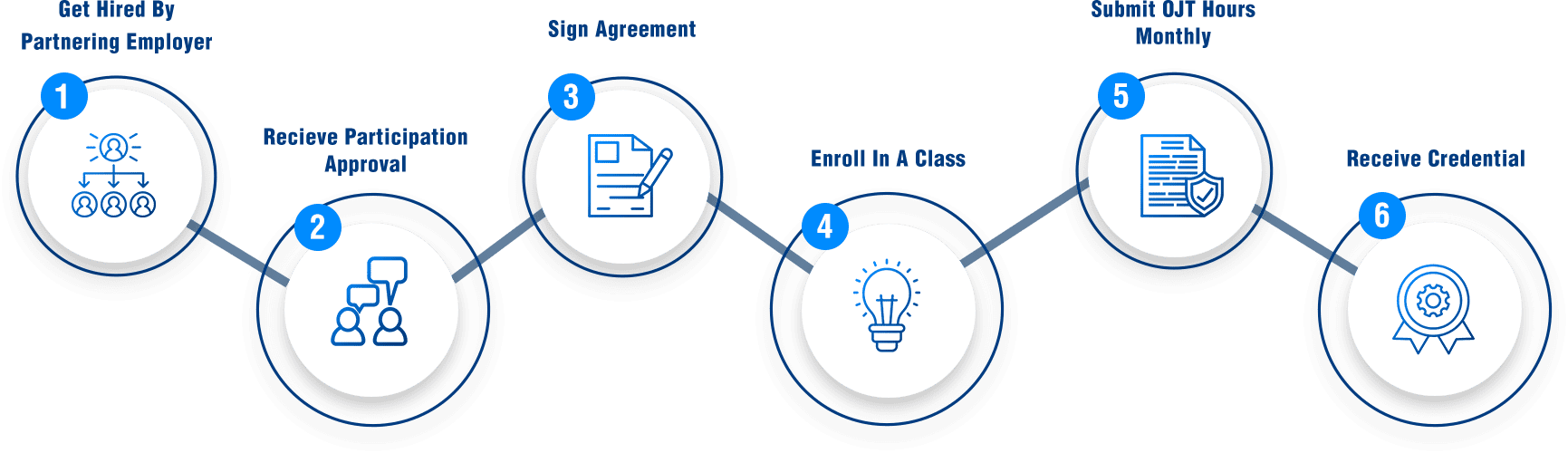
Identify an employer AJAC partners with and apply for an open position.
Talk with your supervisor to receive company approval for participation.
AJAC will visit your employer to sign our Apprenticeship Agreement.
Once you are registered, AJAC will enroll you in our apprenticeship classes.
Each month, submit your on-the-job training hours through our Apprentice Tracking System.
Upon completion, you will receive AJAC's certificate of completion and a journey-level card in your respective occupation.

6 Steps to Becoming an Apprentice
1
Find an Employer Partner: Apply to a company already partnered with AJAC — or, if your employer isn’t yet a partner, they can easily join the program. The process is simple and AJAC will guide them through every step.
2
Get Company Approval: Your supervisor signs off on apprenticeship participation.
3
Sign the Apprenticeship Agreement: AJAC visits your employer to finalize.
4
Start Classes: Enroll in your first college-level course.
5
Track Hours: Log on-the-job training through AJAC’s Apprentice Tracking System.
6
Graduate: Earn your Journey-Level Certificate and AJAC Certificate of Completion.
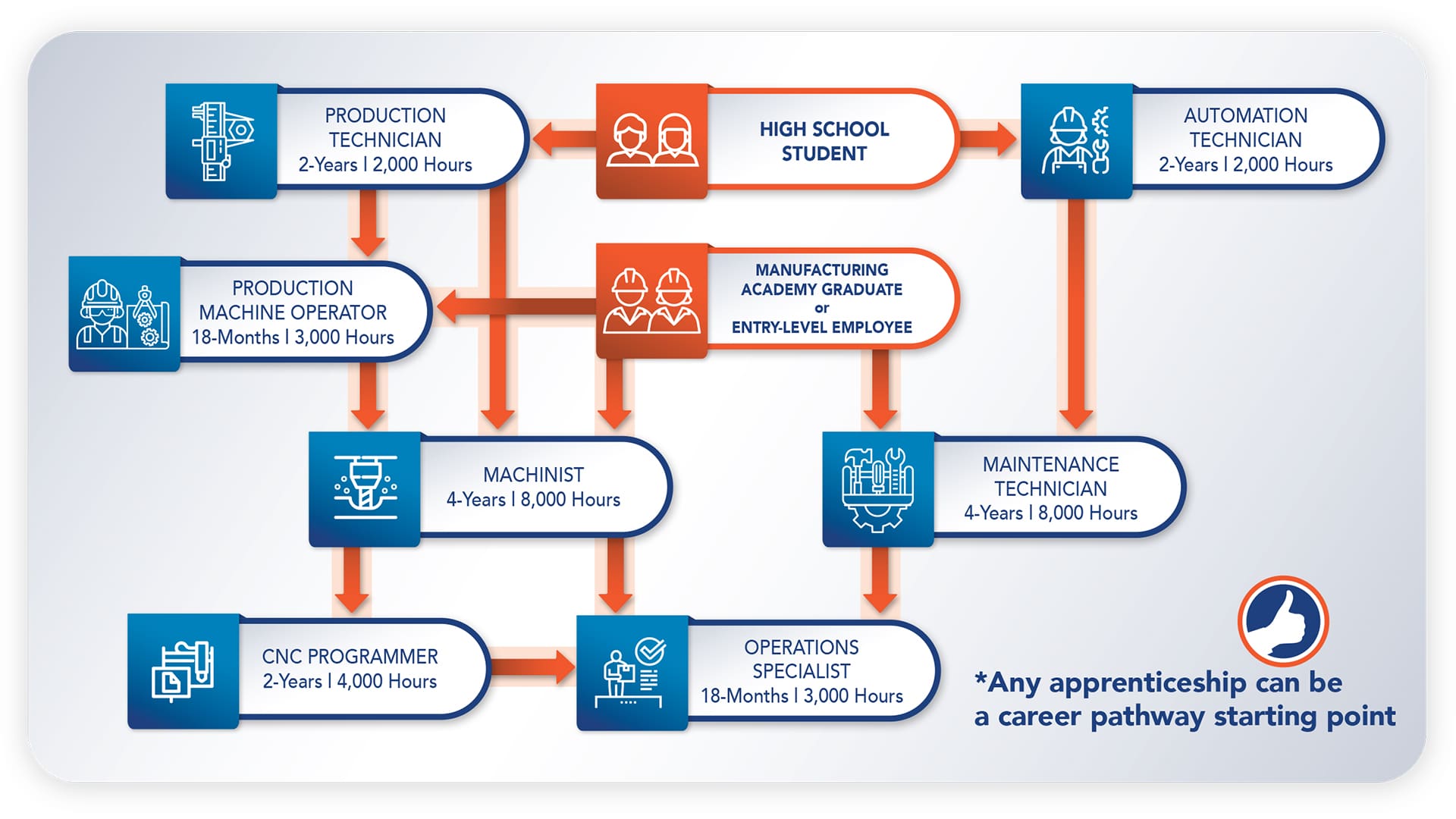
Start Small. Stack Big.
No matter where you begin—whether it’s running machines or maintaining equipment—AJAC’s Stackable Apprenticeships give you the power to keep climbing in your career pathway.
Start in an entry-level role and build your way into highly skilled, specialized, or even leadership positions—all without student debt. Each program builds on the last, helping you expand your skills, increase your earning potential, and take on new responsibilities—without putting your career on hold.
Launch Your Career Today!
Submit your information using the link below. After we receive your information, an AJAC representative will contact you for next steps. Please note, this is not an official application to become an apprentice. After a partnering employer agrees to enroll you in the program, you will officially apply and enroll at that time.